Alex Crease
Engineer • Designer • Educator
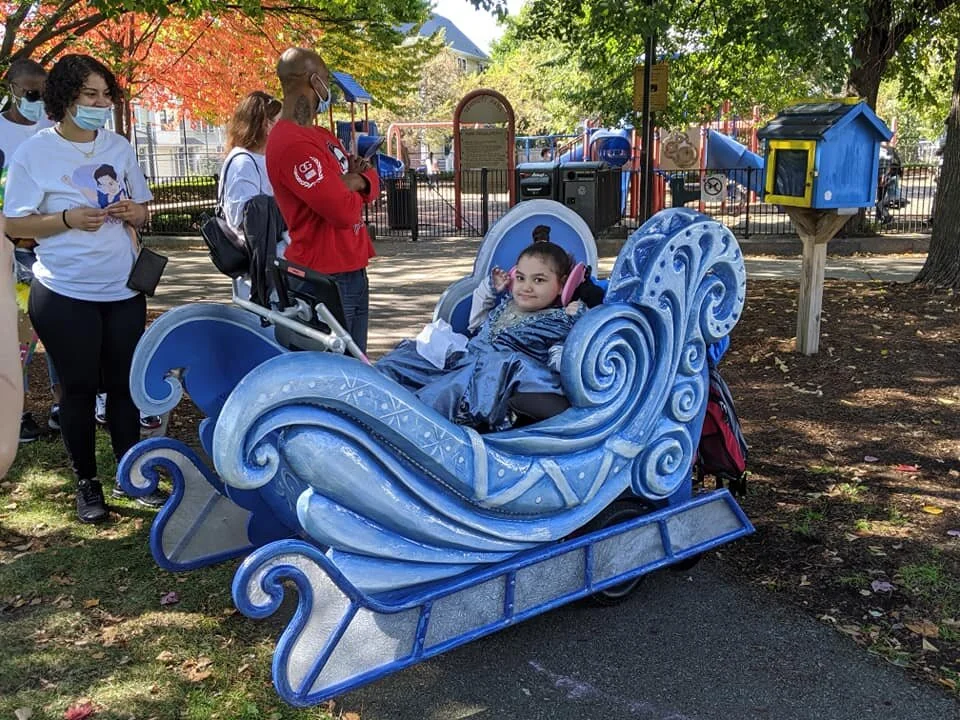
Designing a Frozen-themed Wheelchair Costume
For children growing up with mobility impairments, it can be challenging to connect and engage with peers if they are identified first by a wheelchair and not by a passion. Magic Wheelchair materializes each child’s self-image into an elegant costume integrated into their wheelchair by transforming a perceived disability into a piece of art. As a volunteer for this non-profit, I help people see these kids for who they are: kids!
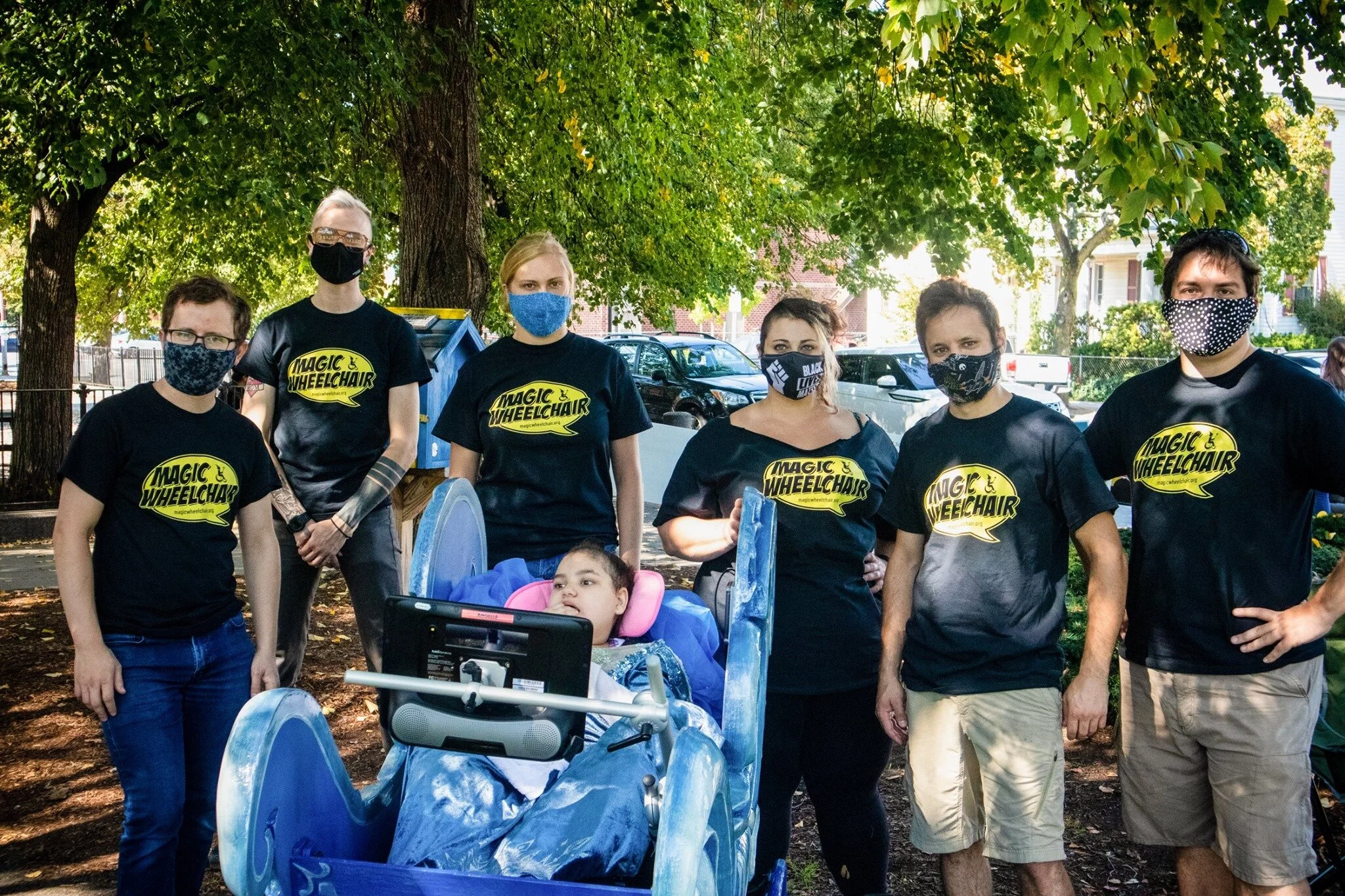
With a team of six, we empowered Angelle to live her dreams of being an ice queen inspired by Disney’s Frozen.
The Challenge
Construct a Frozen-themed ensemble for Angelle and her wheelchair that could attach easily to her chair and not take up too much space for storage.
The Solution
A Queen Elsa-inspired costume that latches on to Angelle’s adjustable chair at three key points, and can be disassembled and flat-packed for storage.
Our Process
Creating a Magic Wheelchair is a balancing act of design, engineering, and collaboration with a child and their caregivers. We intentionally focused on the interplay between the costume’s engineering and the artistic effect, but also had to meet some of the core needs of Angelle and her family. We weren’t just turning Angelle into a heroic ice queen; we were designing an art installation that could attach to her wheelchair, disassemble for storage, and ultimately grow and adapt with Angelle and her adjustable wheelchair. Here’s how we prototyped and built Angelle’s new look:
Brainstorming
After seeking inspiration from the Frozen movies and musical, we sketched out concepts over to-scale drawings of Angelle’s wheelchair.
Our additions needed to fit through a standard door when mounted on the wheelchair, and had to flat-pack for storage.
Mockups
We scaled our sketches to life-size to validate how they fit around the chair, record measurements for mount points, and get feedback from Angelle and her family. First reactions: they loved it!
When we attached the mockup we realized we needed to add clearance for the front swivel-wheels and the wheelchair brake.
Design Development
After measuring mounting locations on the chair, we transferred our mockups into CAD to design the structure and connection points and create CAM for the sleigh profiles.
Since Angelle’s wheelchair is adjustable, we had to ensure the sleigh didn’t interfere with the chair in any of its settings.
Fabrication
With the final measurements confirmed, we cut out a plywood backing for each side and carved and painted foam to sculpt the sleigh.
We made the sleigh sides out of foam to keep the design light, then coated it all in epoxy to make it robust.
Final Touchups
After painting and sealing the pieces with epoxy, we tested the final design on the wheelchair before the big reveal!
Each side piece is attached with thumb screws and has removable runners so the entire sleigh can come apart into flat sections.
Unveiling Day
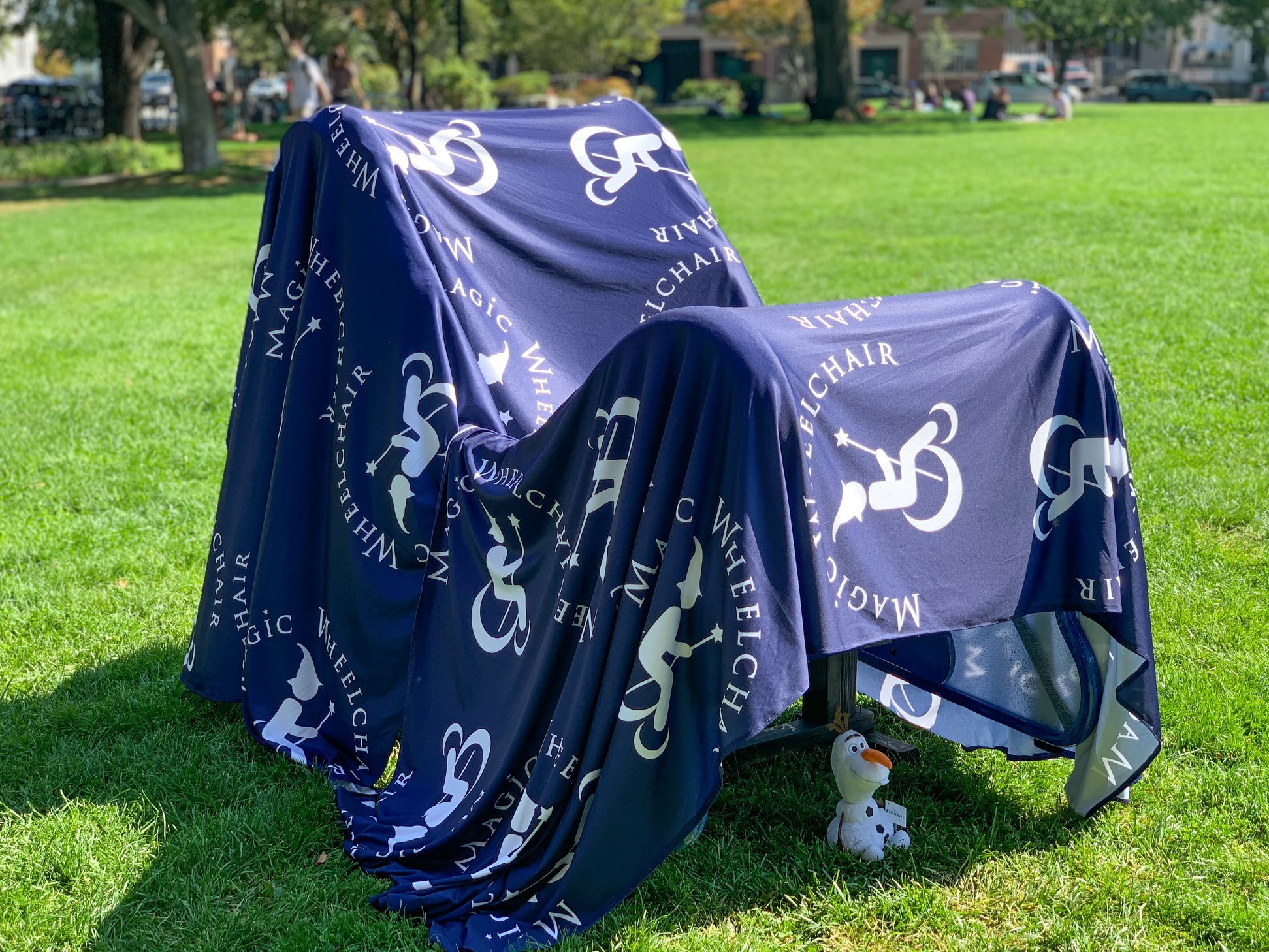
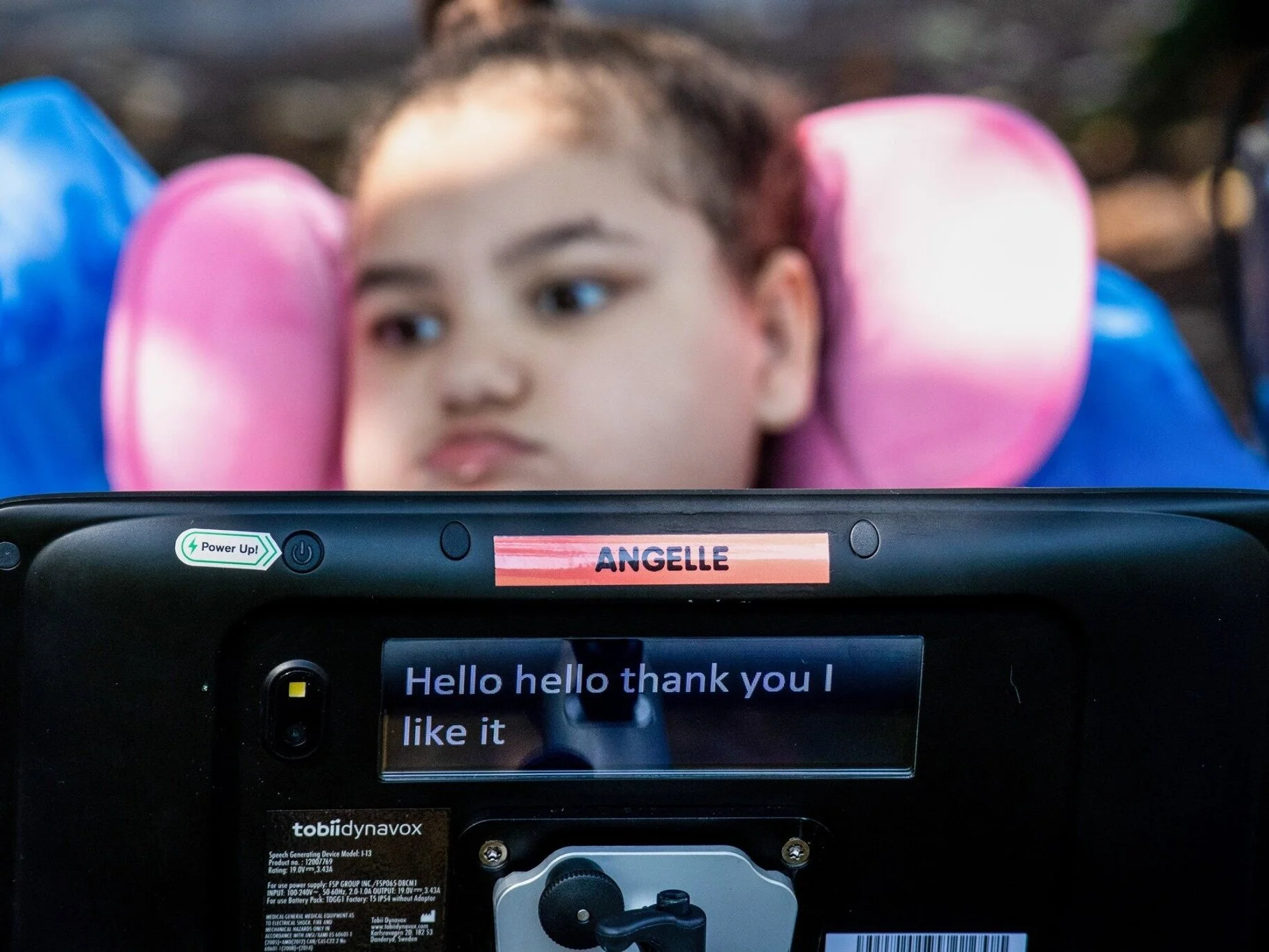
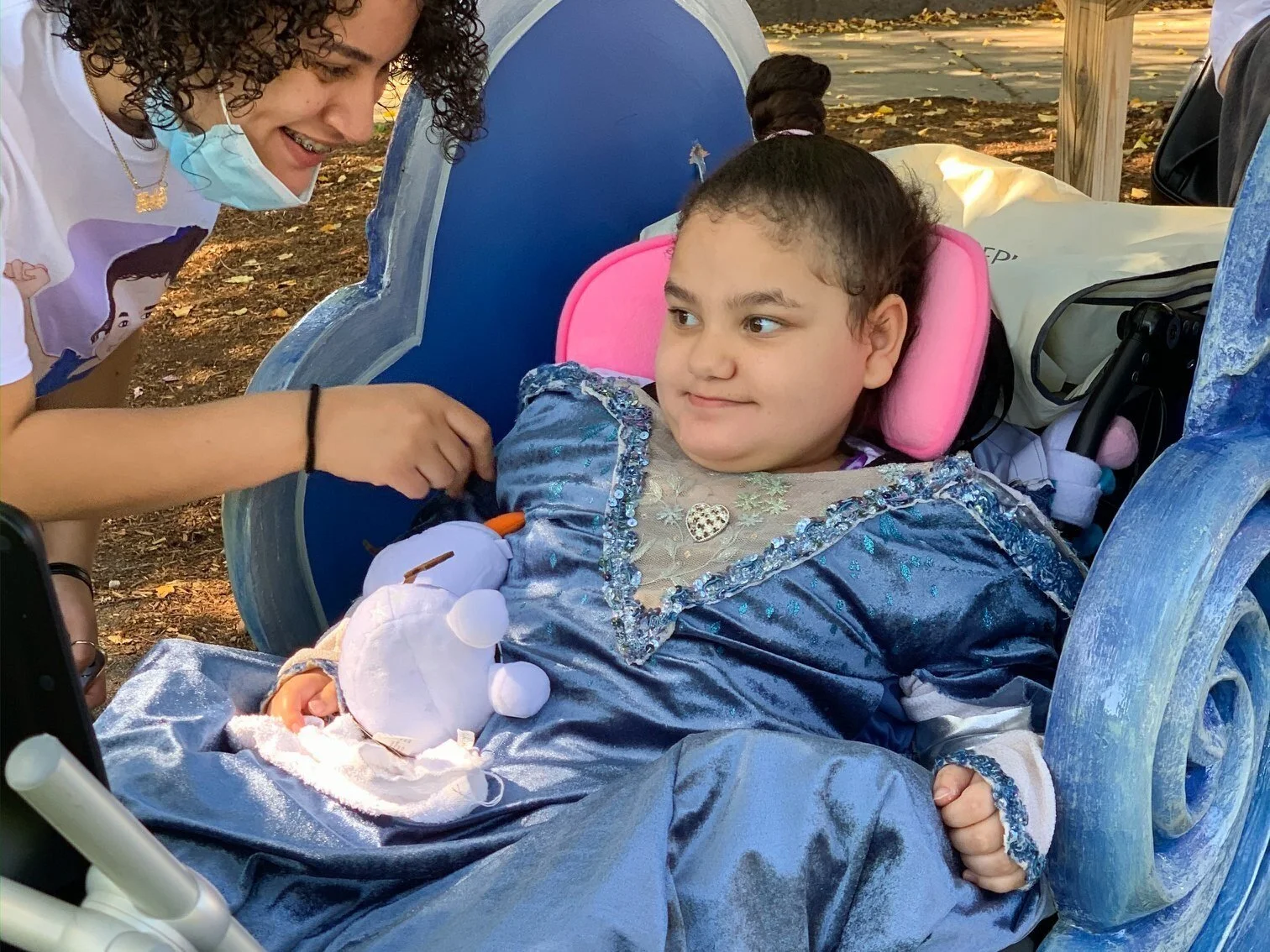
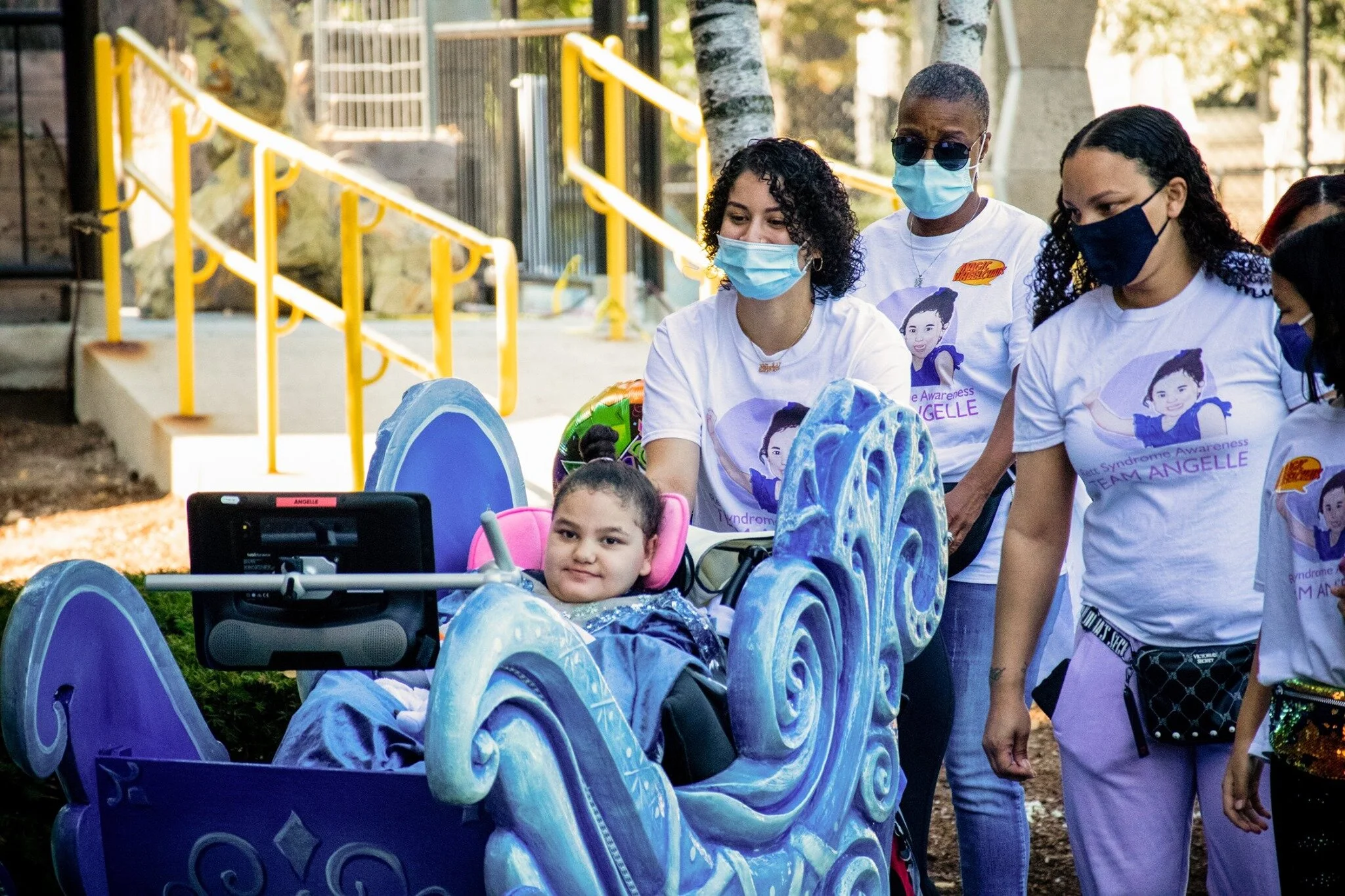
After finishing the sleigh in March we waited until it was safe to throw an outside party for Angelle and her family!
Insights
Working on this project broadened my design intentions through a unique balance of art and engineering. As an engineer, much of my concern is about how things will work and how they are built. While the engineering and structure form the backbone of this piece’s functionality, its design establishes the interaction and the experience. We fused tech with classic sculpting techniques to empower Angelle by highlighting her passions in a hybrid costume-sculpture. These kinds of projects highlight how technology and art can be used to bridge differences and enable empathetic conversations, because they expose our common humanity, passions, and joy.