Alex Crease
Engineer • Designer • Educator
Manufacturing Quick-Turnaround PPE During a Global Pandemic
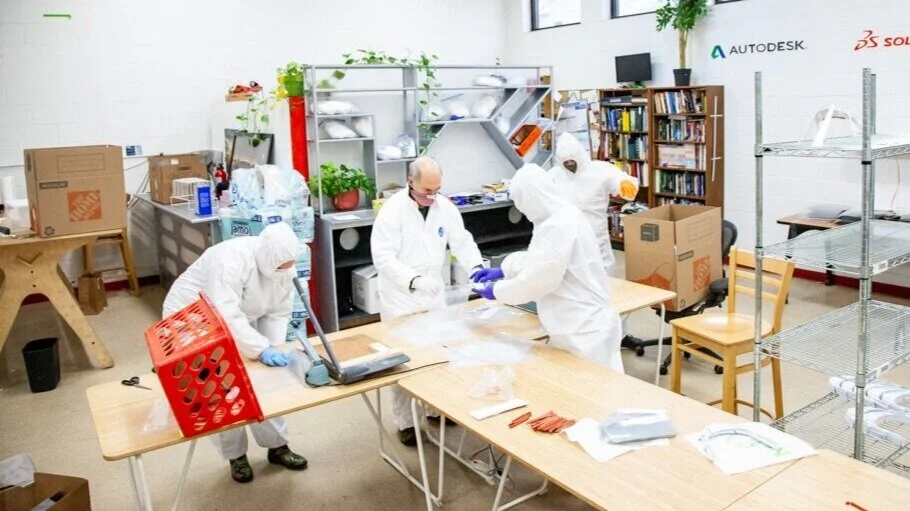
March 2020 quickly exposed our unpreparedness for the escalating COVID-19 pandemic. It crippled the health and financial stability of families across the country, shut down local business, and stressed a tenuous healthcare system to its limit. Hearing the stories of family members actively battling the pandemic from emergency rooms, I wanted to contribute to the fight against COVID-19. I collaborated with other volunteers out of the non-profit makerspace Artisan’s Asylum in Somerville, MA to produce rapidly-manufacturable PPE for local hospitals and clinics in need of supplies.
Over the course of 3 months we made over 35,000 articles of PPE for the Massachusetts medical community.
The Challenge
Design easy-to-make medical protective equipment that teams of volunteers could manufacture, assemble, and ship within a day’s notice.
The Solution
Autoclave-safe face shields, single-piece isolation gowns cut from bulk material, and a set of semi-automated tools to fabricate surgical masks.
Our Goals
We spoke with dozens of medical experts to prioritize their needs and collect design requirements so we could support them effectively:
Easy-to-Source Materials
Many of the raw materials typically used to make medical gear were hard to find. Our designs needed to be adaptable to different materials if we needed to switch suppliers, and we were limited to the fabrication resources available at our makerspace.
We worked with local Tyvek and polypropylene suppliers to identify and evaluate multiple options for gown materials.
Quick to Produce
Hospitals were already low on PPE as we began the project, so we needed to devise ways to ramp up production and deliver orders in quantities of hundreds to thousands in less than a week turnaround.
Our face shield designs could be manufactured and produced more than 100 times faster than go-to 3D printed designs at the time.
Durability & Reuse
Since medical staff were expected to wear the same gear for their entire shift, our products needed to be comfortable enough to sustain extensive use, and ideally cleanable for reuse.
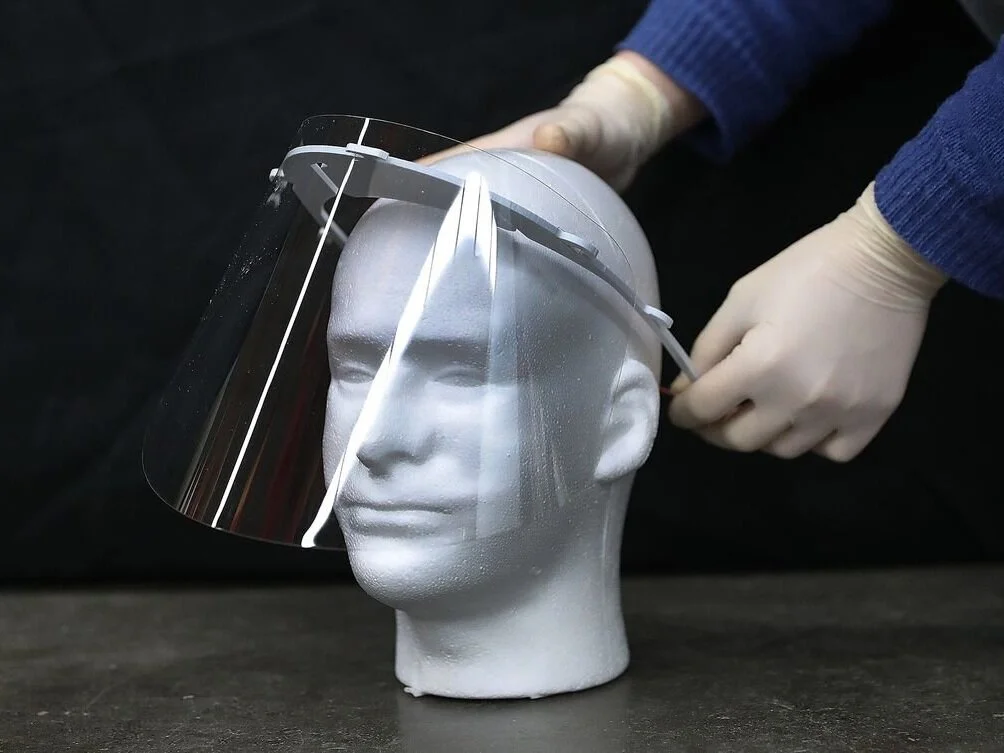
The reusable face shield we designed had adaptable comfort strips and could be cleaned in an autoclave.
Scalability
We needed a process that was easy to scale to larger volumes and other sites if needed, and flexible to the number of volunteers supporting the work at any given time.
Our Isolation Gowns initiative expanded into its own facility to meet the demand for gowns over the course of the summer.
Our Designs
Based on observations about the medical community’s most urgent equipment needs and our available resources, we began designing and producing face shields, isolation gowns, and surgical mask tools.
I supported the prototyping development and process refinement of each project.
Reusable Face Shields
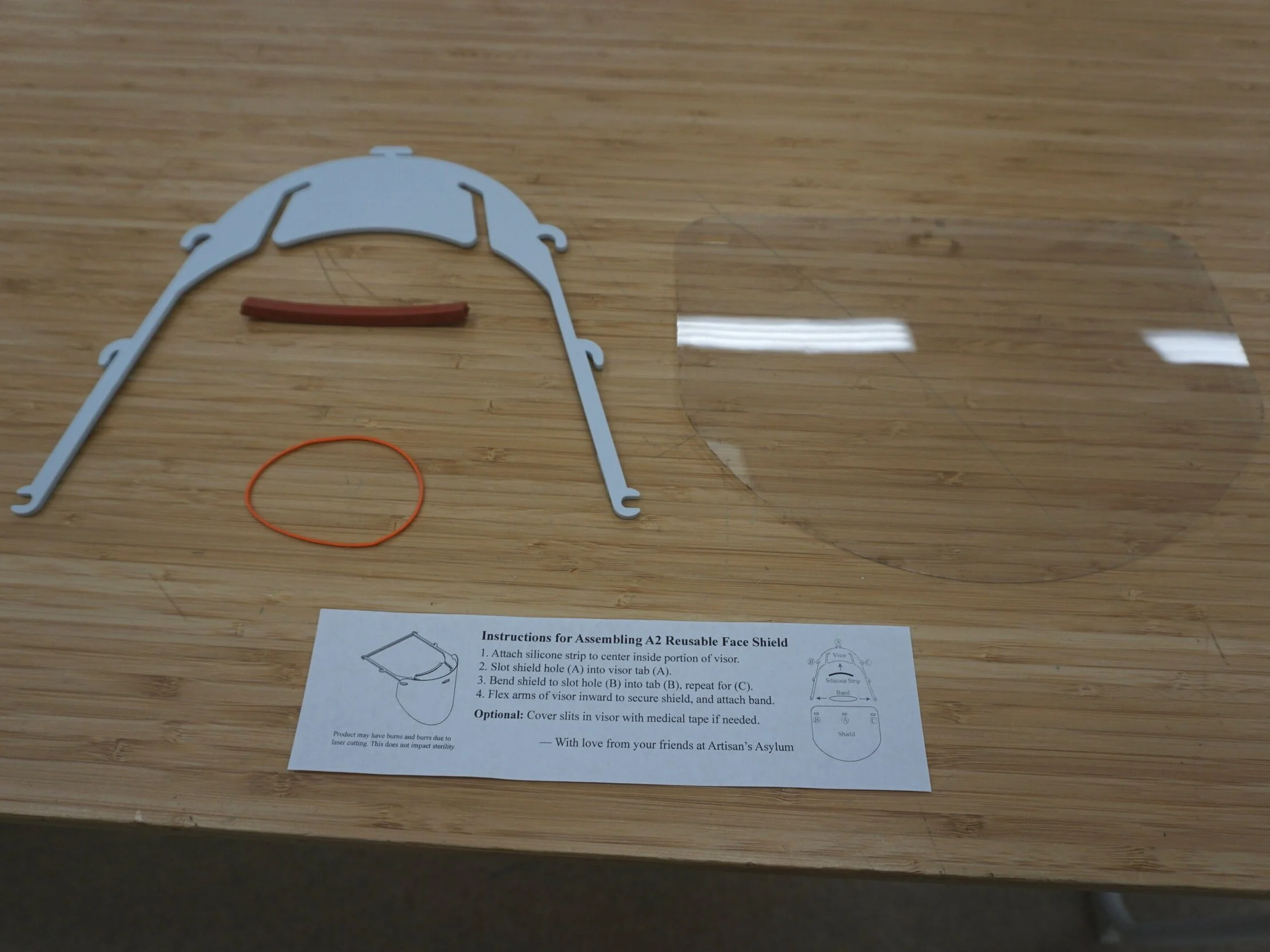
I worked with another volunteer to create reusable face shields that would decrease disposable shield consumption and demand. Since the design is made from industry standard materials for sterilization via autoclave, UV, light, or bleach, hospitals could clean masks in bulk and reuse them.
We designed the visors to tesselate so they could be laser cut in bulk, meaning we could produce them 100 times faster than the 3D printed designs at the time, which were not intended for reuse.
We made over 3,000 reusable face shields.
Isolation Gowns
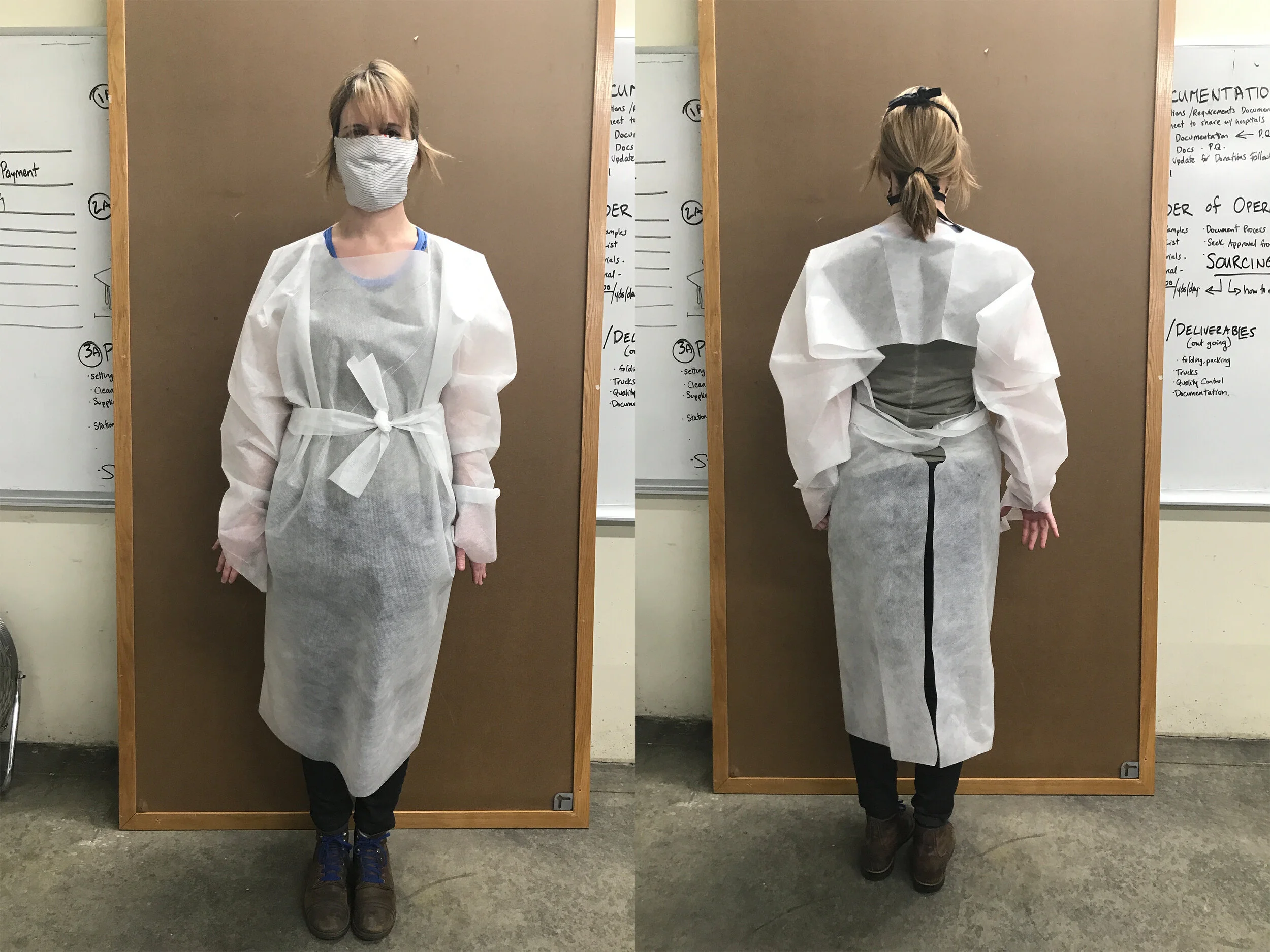
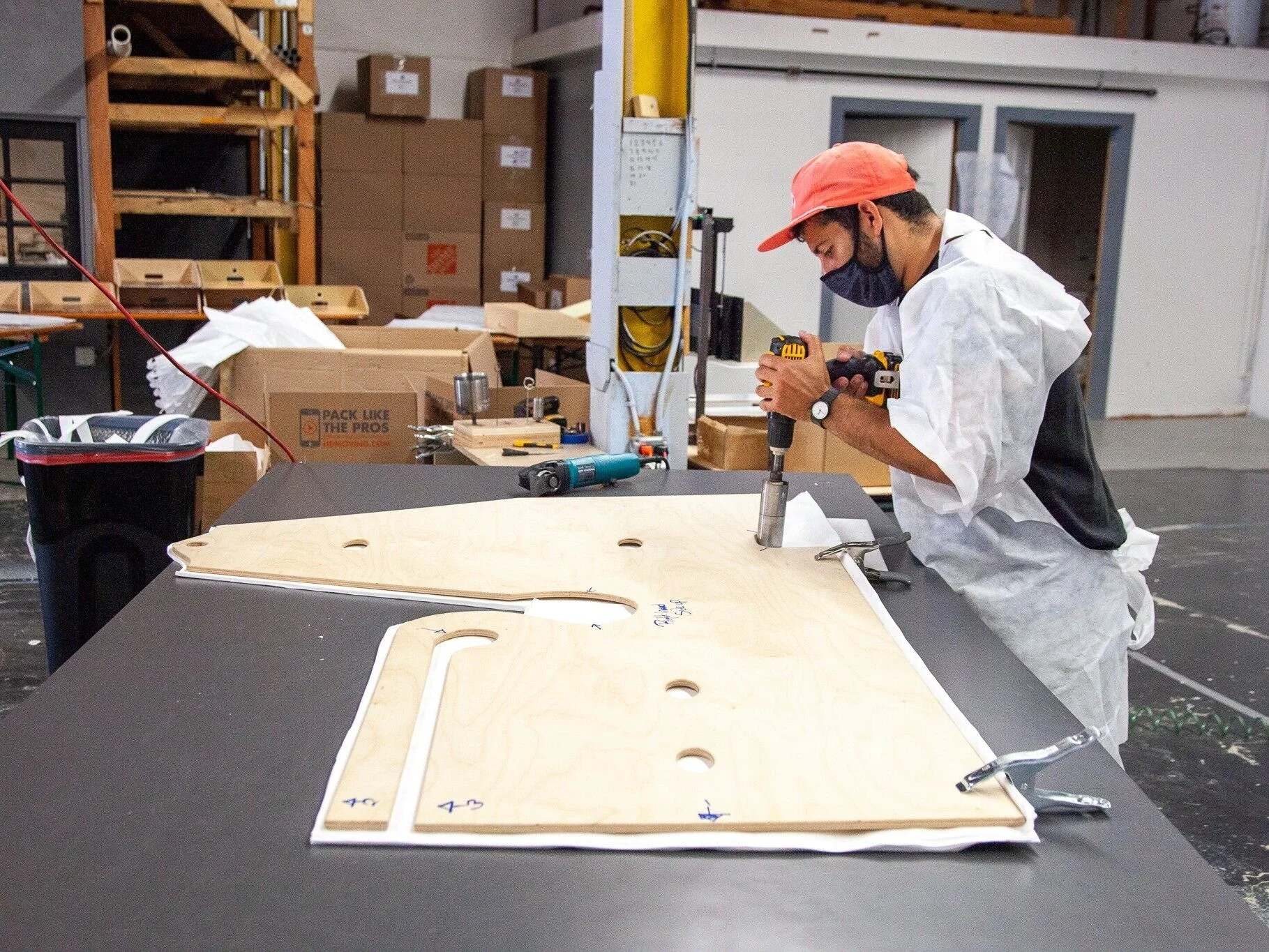
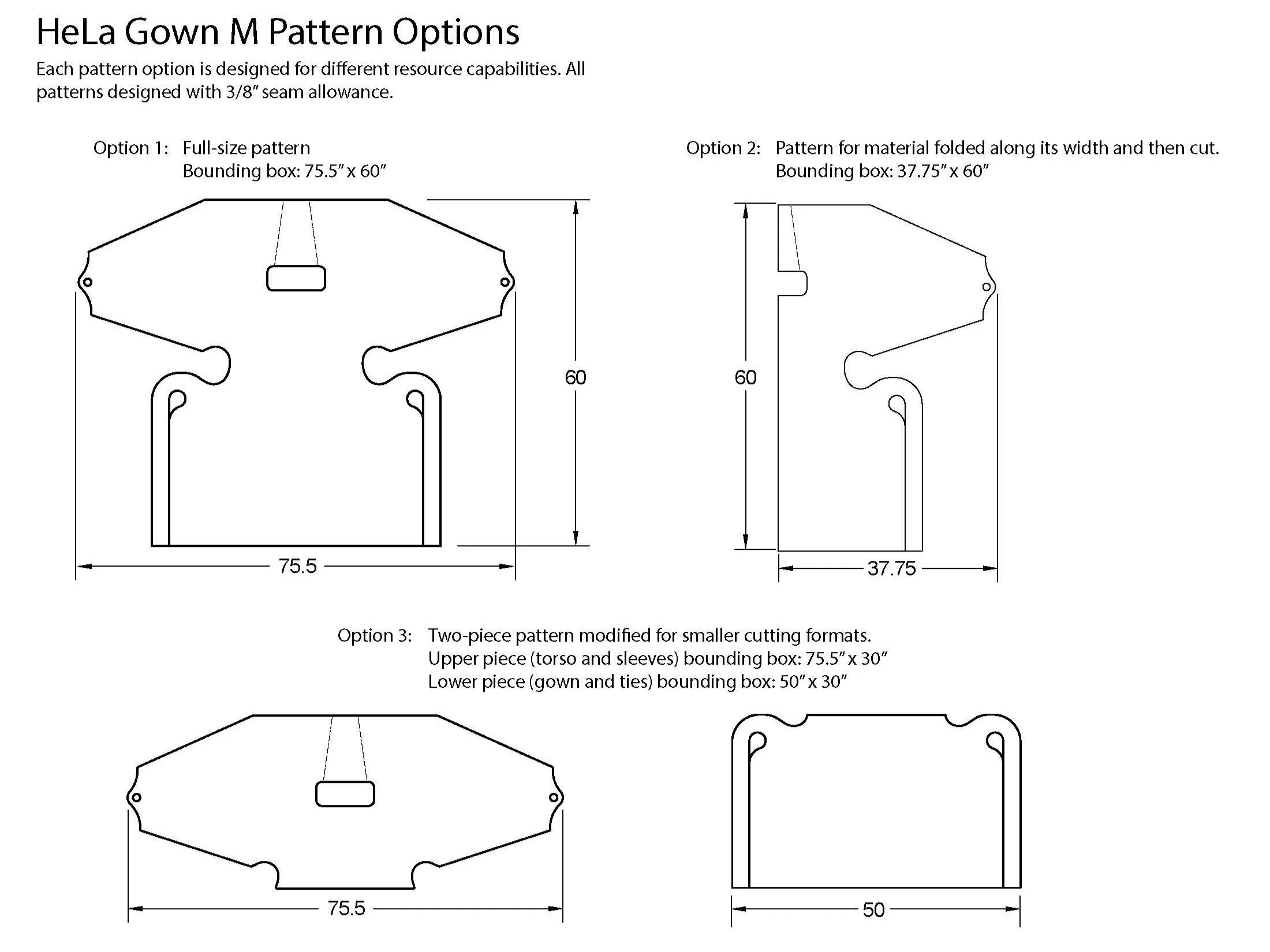
I designed the pattern and cutting jig for a single-piece gown design that could be cut from any medical-grade material. To make gowns in bulk, stacks of spunbond polypropylene were laid out and compressed beneath a wooden jig, and then cut with a fabric saw. The sleeves of each gown were bonded together before folding and shipping.
The process expanded into its own production facility to produce 30,000 gowns over the entire summer.
Surgical Mask Tooling
Surgical masks were also in demand because doctors wore them over N95 and N99 masks to lengthen their usable lifespan. Along with another volunteer I designed tools to pleat surgical mask material, cut it into segments, and then seal elastic onto each mask to make the finished product.

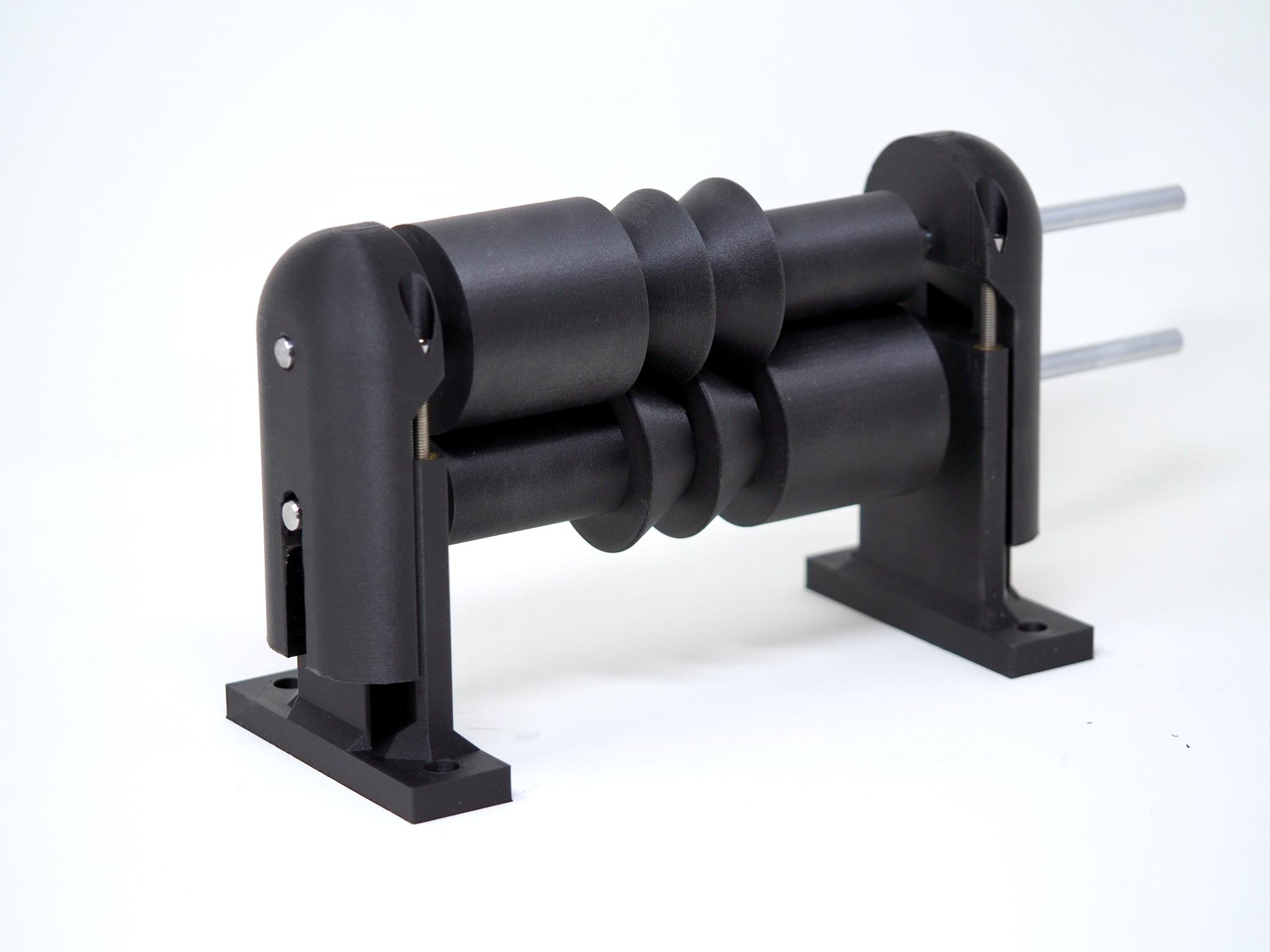
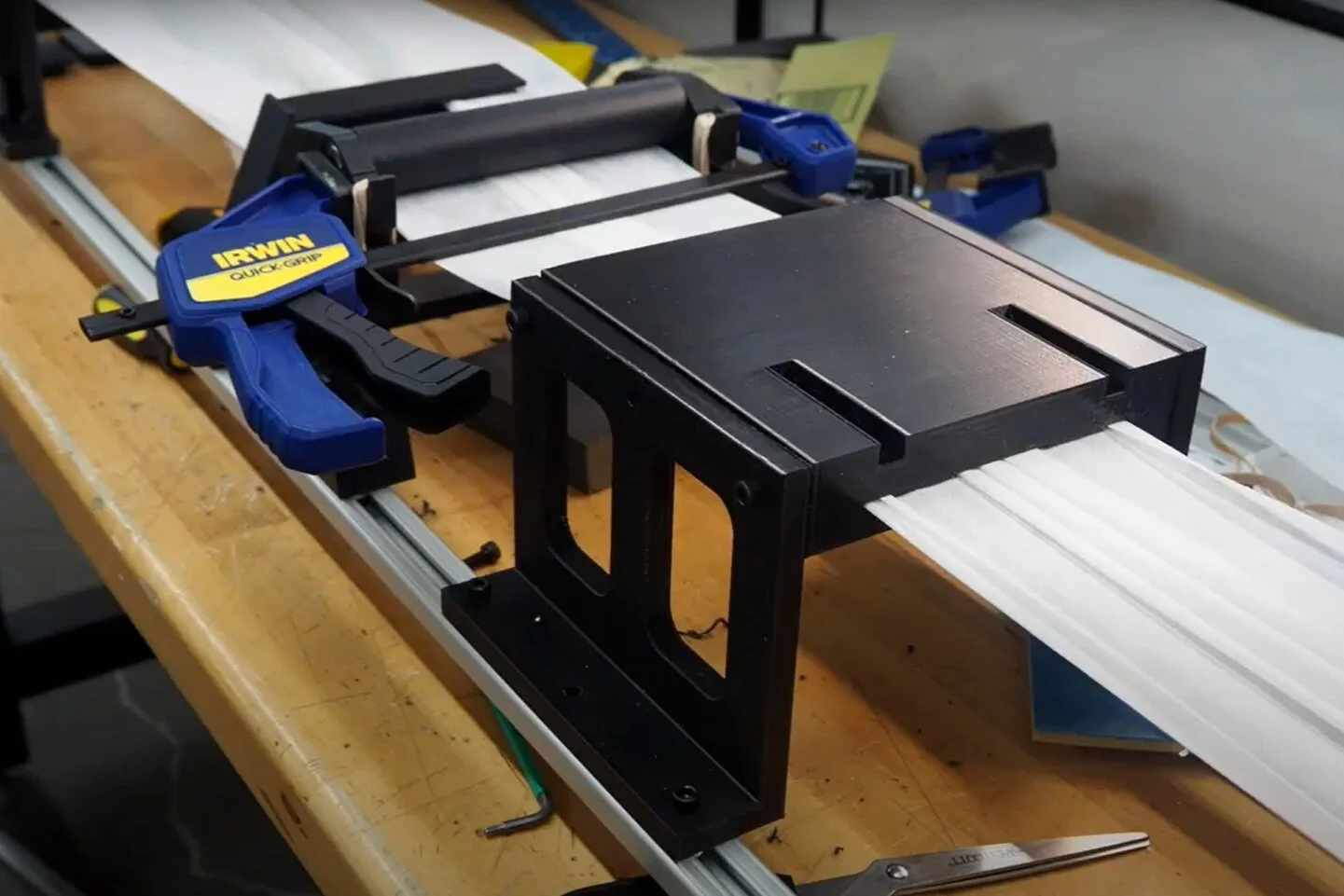
The full pleat forming machine.
Pleating Machine
Each stage of the hand-cranked pleating machine pictured above progressively creases and flattens the pleats to produce a spool of pleated material. We designed the entire system to be modular so that we could update the machine as we refined our designs.
Mask Sealing Machine
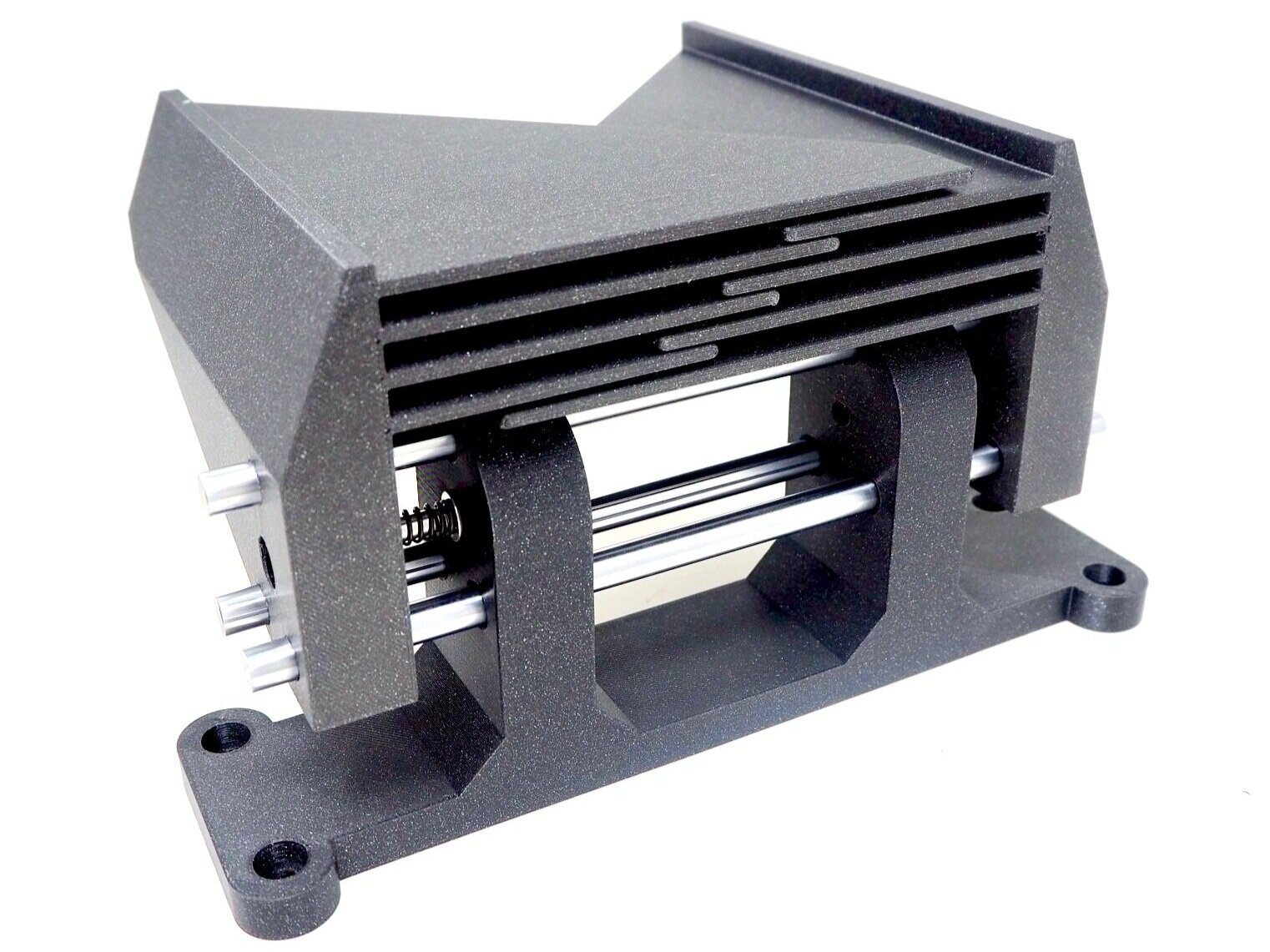
This part of the mask-making setup takes pleated segments of polystyrene and heat-seals elastic bands onto them to form the ear loops of a finished mask.
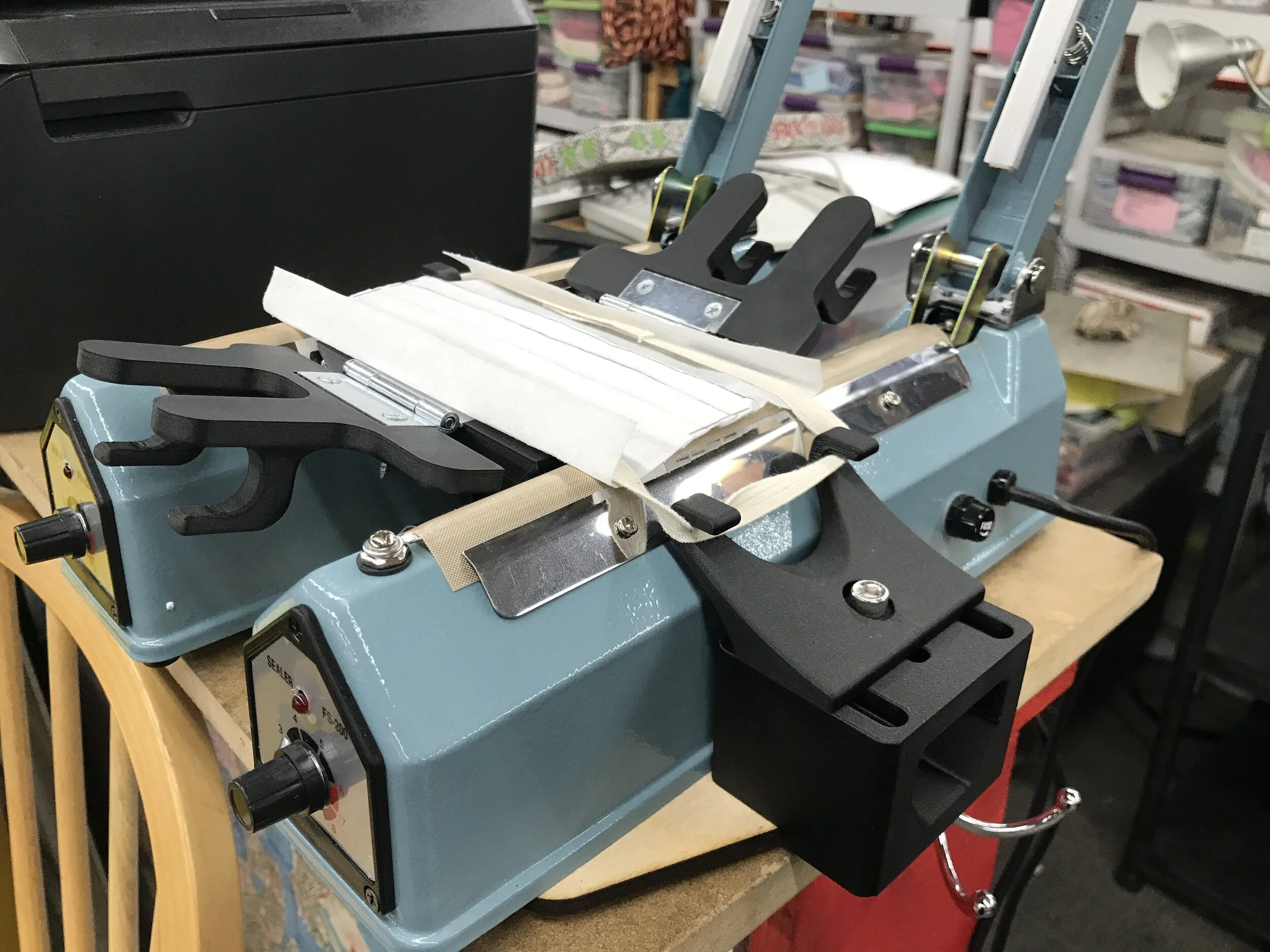
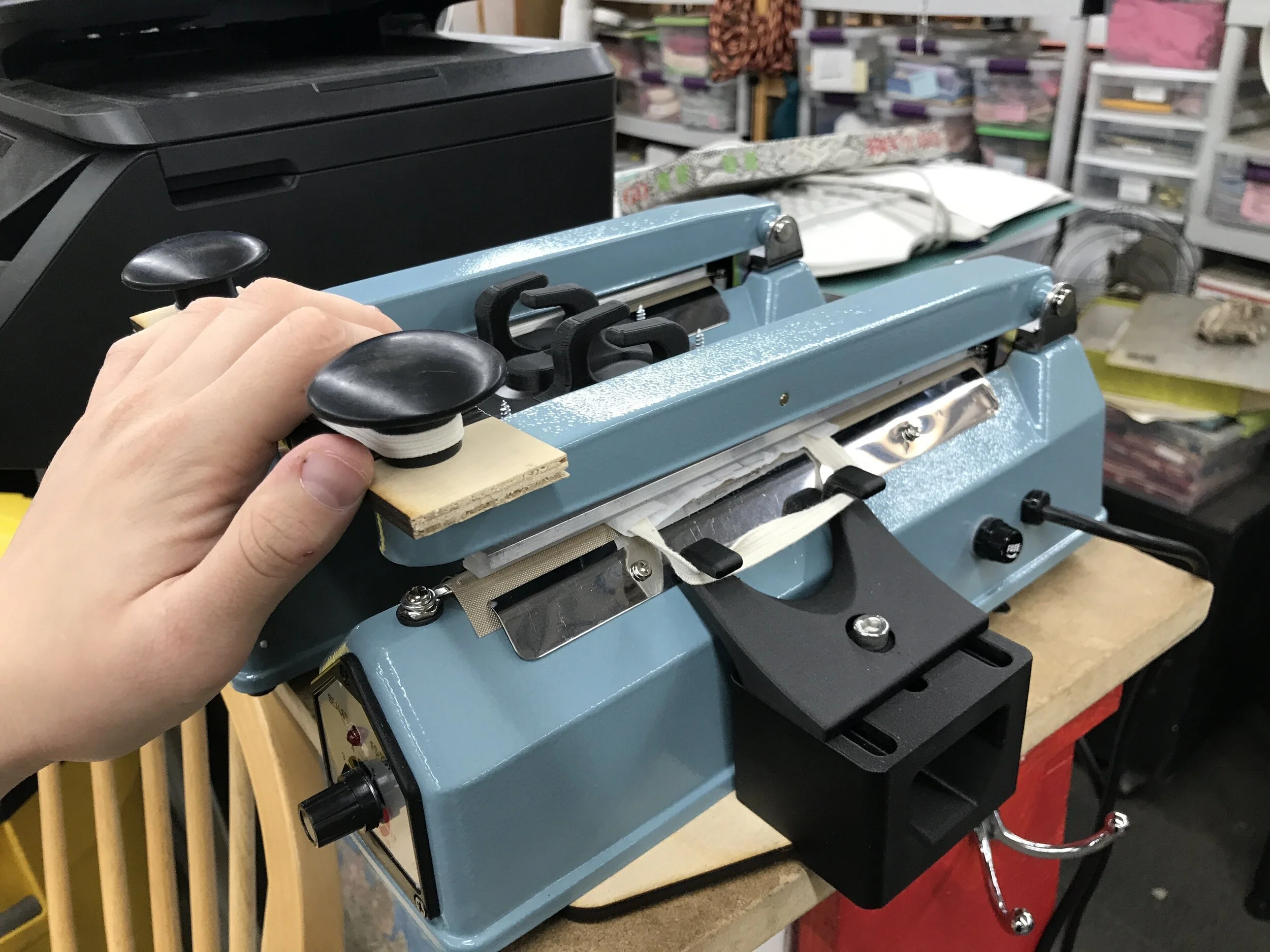
We built tools for local manufacturers and shared our designs online to help produce hundreds of masks per day.
Insights
The PPE initiative was entirely grassroots, driven by the efforts of many volunteers who prioritized urgent community action over self-interest. I was one piece of the puzzle dedicated to building these solutions. It was truly inspiring working alongside costumers, fabricators, bakers, makers, and artists with a unified goal of saving lives and slowing the spread. I have profound respect for all of the individuals I worked with to tackle unfamiliar challenges and fight the pandemic.
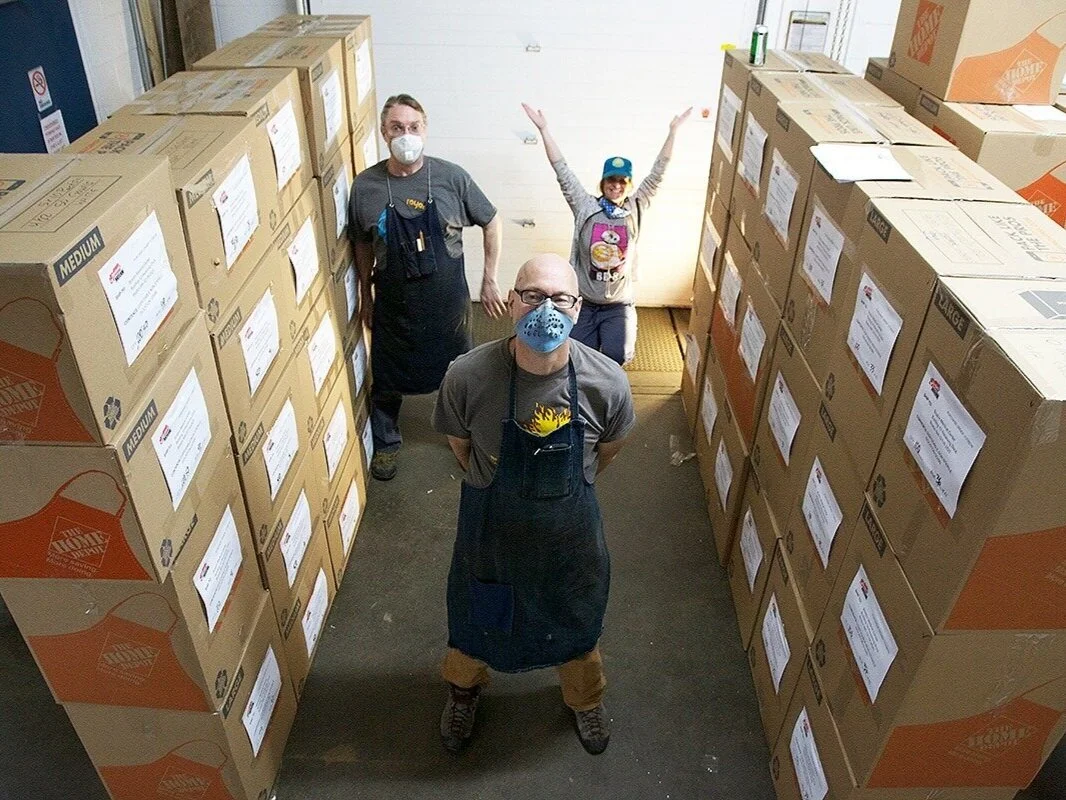
Shipping out a big batch of gowns to one of the local hospitals.